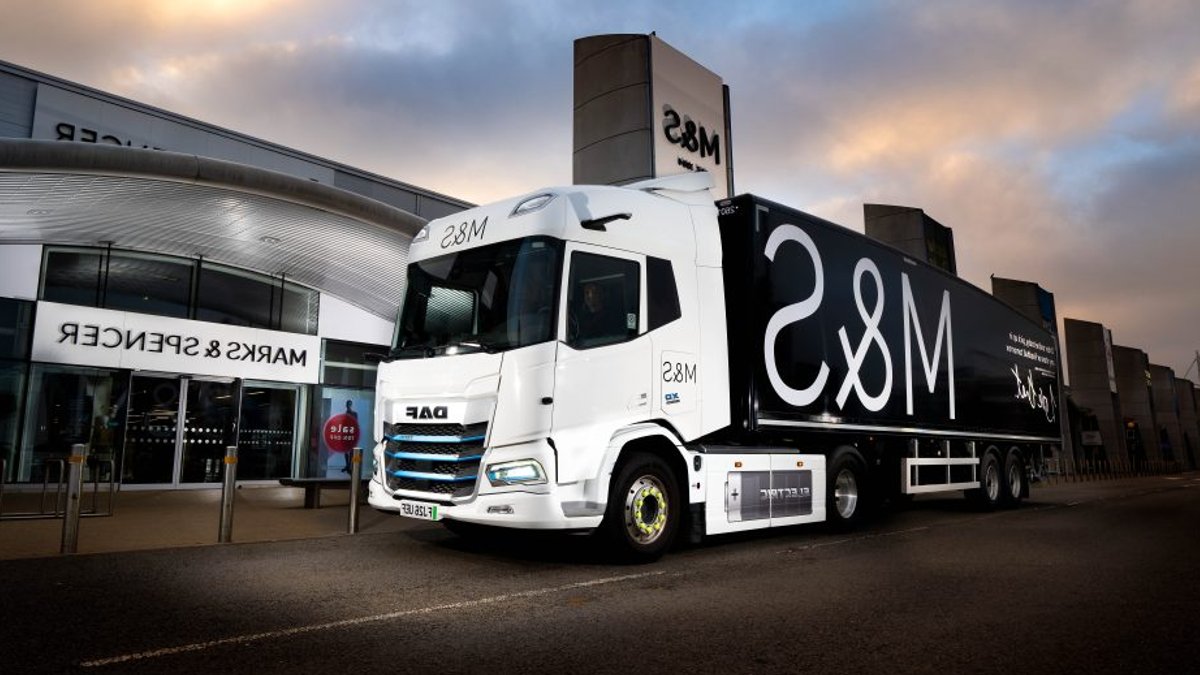
Marks & Spencer is expanding its logistics network with 10 electric trucks to reduce emissions from deliveries to stores and depots. The initiative targets both food and fashion supply chains.
The retailer has started deploying 10 DAF XD electric tractor units. Five are already in use, with the remaining five set to begin service later this year. These vehicles will support M&S Food and its Fashion, Home & Beauty divisions.
Refrigeration without diesel
One of the new trucks includes an integrated inverter that draws power from the main battery to operate the refrigeration unit in its chilled trailer. This design removes the need for diesel-powered refrigeration during food deliveries, marking a first for a DAF truck in the UK.
Related: Teletrac Navman unveils tool for mixed fleets
The company stated this technology advances its goal of fully electric transport operations. It emerged from the eFREIGHT 2030 project, part of a government program to accelerate adoption of electric heavy goods vehicles and charging infrastructure.
The vehicles can handle gross weights between 32 and 42 tonnes. Daily ranges reach 250 to 300 miles, depending on routes, loads, and conditions. They will join eight existing zero-tailpipe-emission electric HGVs and five battery-powered rigid trucks in the fleet.
Most electric trucks in the UK still use separate diesel generators for refrigeration. This approach adds weight, lowers efficiency, and limits environmental benefits. The inverter system eliminates that issue but reduces the truck’s range when refrigeration runs.
Part of a broader net-zero push
Mick Pethard, group fleet manager at M&S, called the move essential for meeting the company’s Plan A Net Zero targets. “Adapting our logistics network is vital in achieving our ambitions,” he said. “We’re committed to reducing carbon emissions from transport. Through collaboration with Gist and DAF, we can test new technologies, cut carbon, save energy, and improve operational efficiencies.”
Related: Indian Companies Making Global Impact
The expansion aligns with the retailer’s broader Plan A strategy, which sets a 2040 deadline for net-zero emissions. The plan focuses on modernizing the supply chain and increasing use of lower-carbon technologies.
Industry estimates indicate electric HGVs may reduce operating costs by up to 30% over their lifespan, though initial prices remain about twice those of diesel models.
This shift reflects growing efforts among retailers to adopt cleaner transport solutions.


